
Quick Answer
Odoo data migration services in India typically cost ₹1.5 lakh to ₹8 lakh (roughly $1,700 to $9,000) for standalone data migration projects, separate from any broader implementation, and take 2 to 6 weeks depending on data volume and source system.
Most Indian data migrations involve moving from Tally, Excel-based records, or an older Odoo version, with GST-relevant fields like GSTIN and HSN codes requiring particular validation attention.
Offshore delivery from India typically costs 40 to 60 percent less than equivalent US or European data migration services, following the same ETL discipline regardless of delivery location.
Introduction
Data migration in India carries one dimension most other markets don’t: getting the GST fields wrong doesn’t just create a messy database, it can produce invoices that fail compliance.
A GSTIN typo or a mismatched HSN code migrated silently from Tally becomes a return problem months later.
This guide applies the general ETL discipline covered in Odoo data migration services specifically to the Indian context: what sources businesses actually migrate from, what needs GST-specific validation, and what this work costs when delivered by a local partner or an offshore team.
It complements the broader process in Odoo migration process and the wider service picture in Odoo migration services.
Common Data Sources for Indian Businesses
Most Indian SMEs migrating data into Odoo come from one of three sources: Tally, Excel-based record keeping, or an older Odoo installation being upgraded rather than replaced. Each source carries its own migration profile.
Tally remains the dominant accounting software among Indian small and mid-sized businesses, and its ledger-based structure needs deliberate mapping into Odoo’s chart of accounts and contact model.
Tally exports ledgers, groups, and vouchers in formats that require translation rather than a direct field-for-field copy into Odoo’s data structure.
Excel-based record keeping is common among smaller businesses and newer companies that haven’t yet adopted a dedicated accounting package.
This source generally needs more manual cleanup than a structured system like Tally, since spreadsheets rarely enforce the same data consistency a database does.
Businesses upgrading from an older Odoo version follow the version migration path covered in Odoo migration process, though GST-relevant configuration should still be re-validated after any version upgrade given how frequently compliance rules have changed in recent years.
GST-Specific Data Validation
ETL for Indian businesses adds a validation layer beyond the standard extract, transform, and load discipline: confirming GST-relevant fields are accurate before they enter Odoo’s live system.
This matters because errors here don’t just affect internal reporting, they affect legally required tax filings.
GSTIN validation should check every customer and vendor GSTIN against the government portal format before import, since an invalid or mistyped GSTIN causes downstream filing problems.
HSN and SAC codes on products and services need review for accuracy, particularly when migrating from a system like Tally where these codes may have been entered inconsistently over years of manual use.
Place of supply logic, which determines whether a transaction carries CGST and SGST or IGST, depends on accurate state information for every customer and vendor record.
Migrated address data should be validated specifically for state accuracy, since this single field drives tax calculation correctness on every future transaction.
Migrating from Tally to Odoo: Data-Specific Notes
Tally’s ledger and voucher structure requires mapping into Odoo’s chart of accounts and transaction models, with particular attention to how Tally groups accounts differently than Odoo’s own account type structure.
A mechanical one-to-one ledger transfer often produces an Odoo chart of accounts that doesn’t align cleanly with standard reporting needs.
Duplicate ledgers are common in long-running Tally installations, often created because a similar customer or vendor was entered multiple times under slightly different names over years of use.
Merging these duplicates in Tally, before extraction, produces far cleaner results than attempting to resolve them after import into Odoo.
Opening balances and outstanding bills should be prioritized over full historical voucher migration, following the same historical data principle that applies across most ERP migrations.
Most Indian businesses keep older years of Tally data accessible as a read-only archive rather than migrating every historical voucher into the live Odoo system.
What Does Data Migration Cost in India?
Standalone data migration projects in India, separate from a full implementation, typically cost ₹1.5 lakh to ₹8 lakh depending on data volume, source system complexity, and how much cleanup the source data needs. A straightforward migration from a well-maintained Tally installation with moderate data volume sits toward the lower end of this range.
| Migration Scope | Typical Cost (INR) | Approximate USD | Typical Timeline |
| Small (single entity, clean Tally data) | ₹1.5 lakh to ₹3 lakh | $1,700 to $3,400 | 2 to 3 weeks |
| Moderate (multiple ledgers, some cleanup needed) | ₹3 lakh to ₹6 lakh | $3,400 to $6,800 | 3 to 5 weeks |
| Complex (multi-GSTIN, heavy Excel reconciliation, or legacy system) | ₹6 lakh to ₹8 lakh or more | $6,800 to $9,000 or more | 5 to 6 weeks |
Cost rises primarily with data quality issues and volume, not with the migration concept itself. A business with clean, well-organized Tally records pays considerably less than one reconciling years of inconsistent Excel spreadsheets across departments.
Indian consultant rates for this specialized work typically run ₹2,000 to ₹5,000 per hour, consistent with broader Odoo consulting rates in the region. This creates a substantial offshore cost advantage for international businesses considering Indian delivery for their data migration work specifically.
Choosing Between a Local Partner and Offshore Delivery
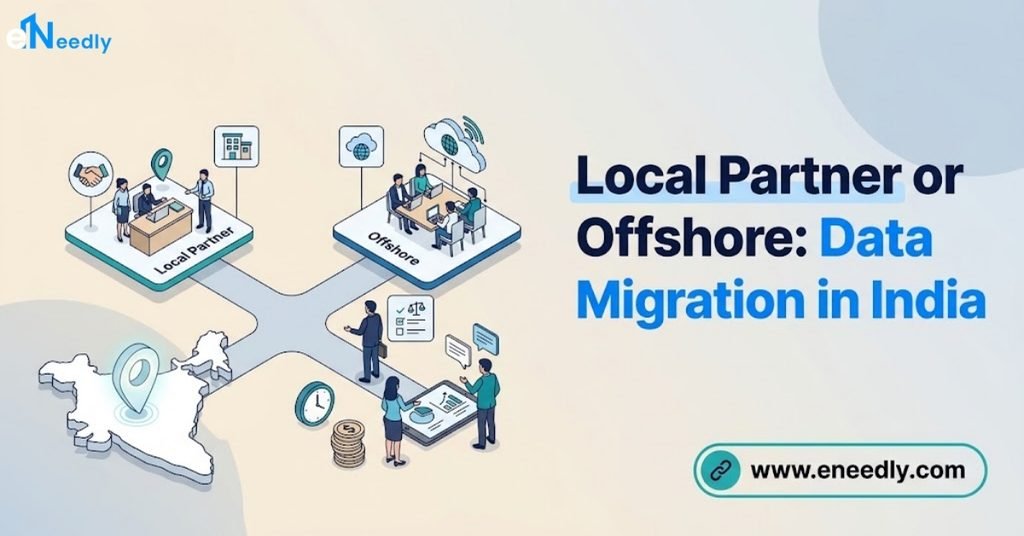
A local partner based in the same city or region offers the advantage of in-person availability for data validation sessions, particularly useful when GST compliance questions arise that benefit from a chartered accountant or local partner reviewing data together in real time.
This proximity matters more for data migration than for some other Odoo work, given how directly GST accuracy ties to legal compliance.
International businesses using an Indian offshore team for data migration specifically should confirm the team includes someone familiar with Indian tax and compliance requirements, not just general ETL technical skill.
Data migration competence and Indian compliance knowledge are related but distinct skills, and confirming both exist on the assigned team protects against GST-related mapping errors.
Both local and offshore models can deliver quality data migration work when structured well. The deciding factor should be whether your business needs in-person collaboration during data validation, not a general assumption that either model produces better technical results.
Common Mistakes in Indian Data Migration
Migrating GSTIN and HSN codes without validation. Inconsistent Tally data entry over years often contains typos or outdated codes that migrate silently if not specifically checked. Validate every GSTIN against portal format and review HSN and SAC codes for accuracy before import.
Not merging duplicate Tally ledgers before extraction. Years of manual entry commonly create duplicate customer or vendor ledgers under slightly different names. Identify and merge these in Tally itself, before the export step, rather than after migration.
Migrating full historical voucher detail instead of opening balances. Moving years of closed transaction history adds significant migration time and cost without proportional business value. Migrate open balances and outstanding bills, and archive older Tally data separately.
Assuming Excel-based data needs less validation than Tally data. Spreadsheet-based record keeping often has more inconsistency than a structured accounting system like Tally, since spreadsheets enforce no data validation rules automatically. Budget genuine cleanup time for Excel-based sources specifically.
Choosing a provider based on rate alone without confirming GST knowledge. A technically skilled ETL team without specific Indian compliance familiarity can still produce GST mapping errors. Confirm the assigned team includes GST-aware expertise, not just general data migration skill.
Who Needs This Service
Indian SMEs and MSMEs migrating from Tally, Excel-based systems, or an older Odoo version to a current Odoo installation are the clearest audience for dedicated data migration services. This group benefits most from the GST-specific validation discipline covered throughout this guide.
International businesses evaluating offshore Indian delivery for their own data migration needs, regardless of where their business operates, benefit from understanding the cost structure and local expertise available in this market. This applies whether the broader implementation happens onshore or the data migration specifically gets delegated to an Indian team.
This service matters less for a business with minimal historical data or one starting fresh in Odoo with no legacy system to migrate from, where a clean implementation start makes dedicated migration services unnecessary.
Frequently Asked Questions
How much does data migration cost in India?
Standalone data migration projects typically cost ₹1.5 lakh to ₹8 lakh depending on data volume and source system complexity, separate from any broader implementation cost. Clean, well-maintained Tally data migrates more affordably than heavily inconsistent Excel-based records.
Can Tally data be migrated directly into Odoo?
Yes, through structured export and mapping of ledgers, groups, and vouchers into Odoo’s chart of accounts and transaction models. Duplicate ledgers should be merged in Tally before extraction for the cleanest result.
Why does GST validation matter during data migration?
Inaccurate GSTIN, HSN, or SAC codes migrated from a legacy system can cause tax filing errors once inside Odoo’s live system. Validating these fields specifically, rather than assuming source data accuracy, protects against compliance problems after going live.
Should I choose a local Indian partner or an offshore team?
This depends on whether your business benefits from in-person data validation sessions, particularly useful for GST-related questions. Both models can deliver quality results when the team includes genuine Indian compliance knowledge alongside technical ETL skill.
How long does data migration take for an Indian business?
Most standalone data migration projects take 2 to 6 weeks depending on data volume and how much cleanup the source data needs. A clean, well-organized Tally migration typically completes faster than a multi-source or heavily inconsistent Excel-based migration.
Is offshore Indian data migration cheaper for international clients?
Yes, typically 40 to 60 percent less than equivalent US or European rates for comparable ETL work. The savings apply specifically to the technical migration work, though confirming Indian compliance knowledge still matters if the migration involves Indian entity data.
Key Takeaways
Odoo data migration services in India follow the same ETL discipline as any migration, with one critical addition: GST-specific validation on GSTIN, HSN, and SAC fields that directly affects legal compliance once live.
Tally remains the most common source system, and its ledger structure needs deliberate mapping rather than mechanical field transfer.
Cost scales primarily with data quality and volume rather than the migration concept itself, and choosing between a local partner and offshore delivery should depend on whether in-person GST validation sessions genuinely matter for your business.
Confirming Indian compliance knowledge alongside technical ETL skill protects against the specific errors this market’s data migrations are most prone to.
Validate every GSTIN and HSN code against current standards before considering your Indian data migration complete.