
Quick Answer
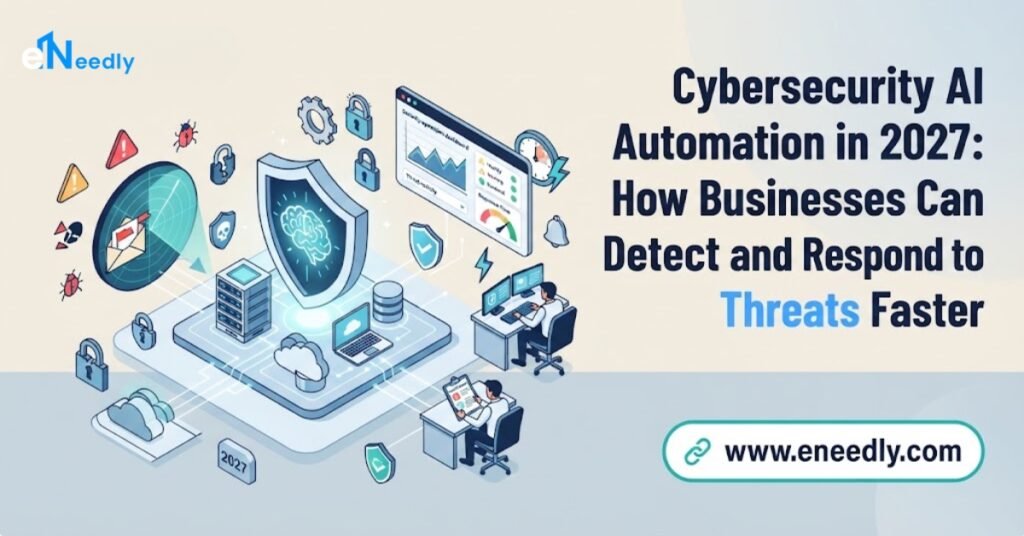
Cybersecurity AI automation uses artificial intelligence to watch your systems, spot suspicious activity and respond to threats automatically, often much faster than a person working alone.
In 2027, businesses of every size face constant attacks and have too few security staff to review every alert by hand, so automation has become a practical necessity.
eNeedly, a digital solutions agency with over 8 years of experience, helps businesses plan and build AI-driven security automation, secure websites and clear security workflows that protect customers and keep operations running.
What Is Cybersecurity AI Automation?
Cybersecurity AI automation is the use of artificial intelligence and automated workflows to protect digital systems from attacks. It combines two ideas:
- AI, which learns what normal activity looks like and recognizes when something is unusual.
- Automation, which carries out actions automatically, such as blocking a suspicious login or alerting the right person, without waiting for someone to do it manually.
Together, they allow a business to monitor its websites, accounts, applications and networks around the clock.
Instead of a security team reading thousands of alerts, the system sorts them, highlights the dangerous ones and takes the first protective step immediately.
It is important to understand what this approach is not. It does not replace human experts. It handles the repetitive, high-volume work, so people can focus on investigation, decisions and strategy.
Why Does Cybersecurity AI Automation Matter in 2027?
The pressure on businesses keeps growing, and several trends explain why automation is now so important.
- More digital activity means more entry points. Websites, online stores, customer portals, mobile apps and cloud tools all create places an attacker can try to enter.
- Attacks happen at machine speed. Automated attacks can test thousands of passwords or weak points in minutes. A manual response is often too slow.
- Alert overload. Security tools generate large numbers of warnings. Teams can miss a real threat hidden among many harmless ones.
- Limited security staff. Many small and medium businesses do not have a dedicated security team at all.
- Customer expectations. People want to know their data is safe before they buy, register or share personal details.
- Attackers use AI too. Phishing messages and attack methods are becoming more convincing, which means defenses must become smarter as well.
For these reasons, relying only on manual checks leaves gaps. Automation closes many of them by working continuously and responding in seconds.
How Does AI Automation Improve Cybersecurity?
AI automation helps in several specific ways, each of which solves a common weakness.
Faster threat detection
AI learns the normal pattern of activity, such as when your team logs in, from where and what they usually do. When behavior changes sharply, for example a login from an unusual place at an unusual hour, the system notices it right away.
Faster response
Once a threat is detected, automated workflows can act immediately. They can lock an account, block an address, isolate a device or alert your team, all before an attacker can do much damage.
Fewer false alarms
A good AI system learns which alerts matter and which do not. This reduces the noise, so your team only deals with warnings that deserve attention.
Consistent protection
A person can be tired, busy or on leave. An automated system applies the same rules every hour of every day, including nights, weekends and holidays.
Better use of your team
When routine tasks are automated, your people can spend their time on real investigation, planning and improving your defenses.
What Can Be Automated in Cybersecurity?
Many security tasks are repetitive and rule-based, which makes them suitable for automation. Common examples include:
- Login monitoring: spotting repeated failed logins, unusual locations or suspicious devices.
- Phishing detection: checking emails and links for signs of fraud before users click them.
- Website monitoring: watching for unusual traffic, unexpected changes to pages or signs of tampering.
- Access management: adding or removing user access automatically when people join, change roles or leave.
- Software updates and patch reminders: tracking which systems need updates and flagging the ones at risk.
- Alert sorting: ranking security alerts by seriousness so the most urgent ones come first.
- Incident reporting: collecting the details of an event automatically and creating a clear report.
- Backup checks: confirming that backups run on schedule and can be restored.
Not every task should be fully automated. A sensible plan decides which actions the system can take alone and which should wait for a person’s approval.
What Cybersecurity Services Can eNeedly Provide?
eNeedly brings together web development, design, business solutions and digital marketing. That gives us a practical view of how businesses operate online and where they are exposed. Here is how we can help.
Security-focused website development
Your website is often the first place attackers look. We build and maintain websites with security in mind, including careful setup, safe forms, controlled user access and regular updates.
AI-driven monitoring and alert workflows
We help you design automated workflows that watch your website and key systems, sort alerts by importance and notify the right person at the right time.
Automated response rules
Together with you, we define what should happen when a threat is detected. For example, a suspicious login can trigger a temporary account lock and an instant alert to your team.
Security-aware business processes
Many security problems come from weak processes and not only weak technology. We help you build clear steps for user access, data handling and incident response that your team can follow.
Secure customer-facing tools
If your business uses online forms, customer portals or lead capture systems, we make sure they are built to protect the data that people share with you.
Clear reporting
You should be able to understand what is happening. We provide simple reports that show what was detected, what action was taken and what needs your attention.
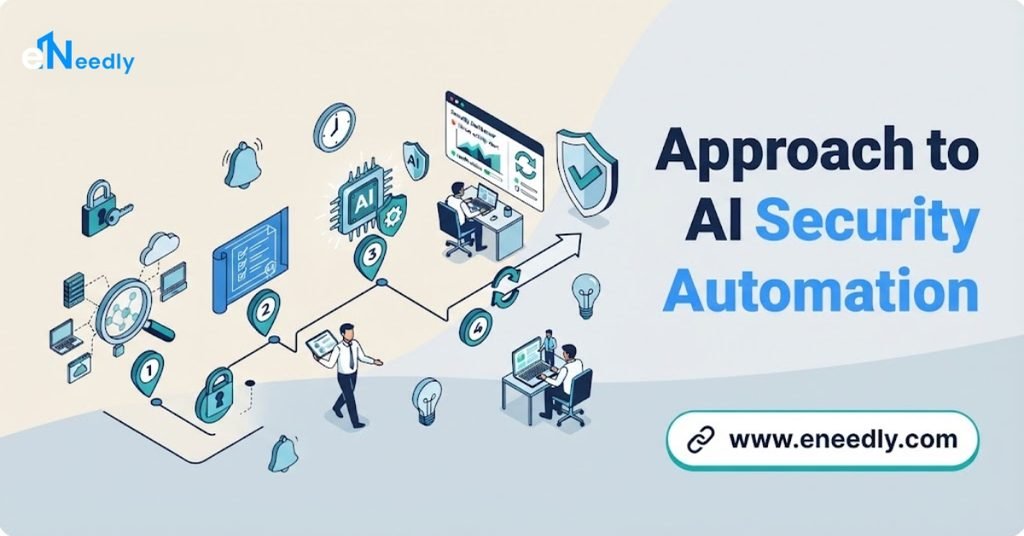
Our Approach to AI Security Automation
We follow a step-by-step process so your security improves in a planned, manageable way.
Step 1: Understand your business and risks
We start by learning what you do online, what data you hold and what would hurt most if it were lost or exposed.
Step 2: Review your current setup
We look at your website, accounts, tools and processes to find weak points and tasks that take too much manual effort.
Step 3: Set priorities
Not everything can be fixed at once. We rank the risks, so the most important protections are built first.
Step 4: Design the automation
We plan which activities will be monitored, which alerts matter and what automatic actions are safe to use.
Step 5: Build and connect
We develop the workflows and connect them to your website and systems, so they work as one process.
Step 6: Test carefully
We test the automation to make sure it detects real problems, avoids unnecessary alarms and does not block your genuine users.
Step 7: Train your team
Tools work best when people understand them. We explain how alerts work and what your team should do when one arrives.
Step 8: Monitor and improve
Threats change, so we review results regularly and adjust the system over time.
Which Businesses Need Cybersecurity AI Automation Most?
Any business with an online presence can benefit, but some face higher risk or have less capacity to respond manually:
- Online stores and e-commerce businesses that handle customer details and payments.
- Service companies that collect client information through forms and portals.
- Small and medium businesses without a dedicated security team.
- Healthcare, education and finance organizations that manage sensitive records.
- Agencies and startups that rely on many online tools and shared accounts.
- Growing companies whose systems and user numbers increase faster than their security processes.
If your business depends on a website, customer data or online tools, automation can strengthen your protection without needing a large security department.
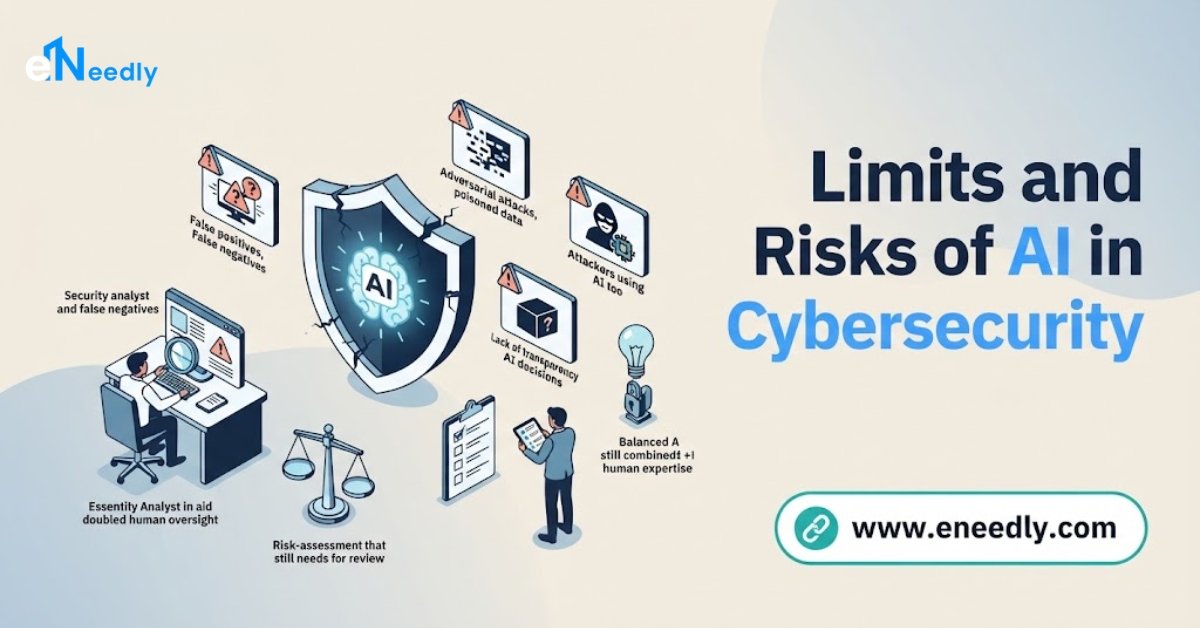
What Are the Limits and Risks of AI in Cybersecurity?
AI automation is powerful, but it needs to be used carefully. A responsible plan considers these points.
It is not a complete solution on its own. Good security also needs strong passwords, regular updates, staff awareness and clear policies. Automation supports these basics and does not replace them.
False positives can happen. Sometimes a system blocks a legitimate user. We design rules and review steps to keep this to a minimum.
Too much automation can cause problems. An action that is too aggressive could interrupt your own business. We decide which responses are automatic and which need human approval.
Data quality matters. AI learns from the activity it sees. Clean, well-organized data leads to better detection.
People remain essential. Final decisions on serious incidents should involve a human. Automation gives your team speed and information, but judgment stays with people.
Being open about these limits is part of building protection you can rely on.
How to Prepare Your Business for 2027
You do not need to automate everything at once. These practical first steps make a real difference:
List your digital assets: your website, accounts, tools, databases and devices.
Identify your most valuable data: customer information, financial records and business documents.
Check who has access to what: remove accounts that are no longer needed.
Turn on stronger login protection: use multi-step verification wherever possible.
Keep software updated: outdated systems are a common way in.
Plan your response: decide in advance who does what if something goes wrong.
Start with the highest-risk area: automate monitoring there first, then expand.
These steps give you a clear base on which AI automation can be built.
What Affects the Cost of Security Automation?
The cost is different for every business, because it depends on how much needs to be protected and how complex your systems are. The main factors are:
- The number of websites, systems and tools to be monitored.
- The level of risk based on the data you handle.
- The amount of automation you want, from simple alerts to automated responses.
- Integration needs with the tools you already use.
- Ongoing monitoring and support after the system is live.
The best way to get a clear figure is to speak with us. After understanding your setup and goals, we can suggest a plan that fits your business and explain exactly what is included.
Get Started a free consultation call
Threats are not going to slow down in 2027, and waiting for a problem before acting is the most costly approach. With the right automation, your business can detect trouble earlier, respond faster and give your customers confidence that their data is in good hands.
Here is how to begin:
- Book a free consultation using the booking form on our website.
- Tell us about your business, your systems and your concerns.
- Receive a clear plan for AI-driven security automation that fits your needs.
You can also contact us directly at info@eneedly.com or on +92 345 114 4664.
Frequently Asked Questions
What is cybersecurity AI automation?
Cybersecurity AI automation uses artificial intelligence to detect suspicious activity and automated workflows to respond to it.
It monitors your systems continuously, sorts alerts by importance and takes protective actions, such as locking an account or notifying your team, without waiting for manual steps.
Will AI automation replace my security team?
No. Automation handles repetitive, high-volume tasks, such as sorting alerts and spotting unusual logins. People are still needed to investigate serious incidents, make decisions and improve your overall security strategy.
Is cybersecurity automation only for large companies?
No. Small and medium businesses often benefit the most, because they usually lack a full-time security team. Automation gives them round-the-clock monitoring and faster responses without the need to hire a large department.
What threats can AI automation help detect?
It can help detect unusual logins, repeated failed password attempts, suspicious website traffic, fraudulent emails and links, unexpected changes to website content and unusual access to sensitive data. The exact coverage depends on how the system is set up for your business.
Can automation block my real customers by mistake?
It is possible, which is why the system must be designed and tested carefully. We set rules that reduce false alarms, and for sensitive actions we can require a person’s approval before anything is blocked.
How do I start with security automation?
Start by listing your digital assets, identifying your most valuable data and checking who has access to what. Then focus on the highest-risk area first. A consultation can help you prioritize and plan the right steps.
How long does it take to set up AI security automation?
The time depends on the size of your systems, the amount of automation you want and how many tools need to be connected. After reviewing your setup, we can give you a realistic timeline for your project.
Why choose eNeedly for cybersecurity AI automation?
eNeedly combines web development, business solutions and digital marketing with over 8 years of experience, so we understand how your business operates online and where it needs protection.
We focus on practical, clearly explained solutions that fit your needs. You can start with a free consultation to see how it would work for you.