
What Is SEO Performance Marketing? A Practical Guide
Quick answer: SEO performance marketing is an approach to search optimization where you tie SEO work directly to measurable business outcomes (leads, sales, calls, revenue) instead of vanity metrics like rankings or traffic alone.
You still do the technical and content work SEO requires, but every decision gets judged by whether it moves a number the business actually cares about.
Here’s the problem we run into constantly: a business owner spends six months and a decent chunk of budget on SEO, traffic goes up, rankings improve, and… nothing changes in the bank account.
That gap between “SEO is working” and “SEO is making us money” is exactly what performance marketing is supposed to close, and this post walks through how.
What Does SEO Stand For, and Why Does the Full Meaning Matter?
SEO stands for Search Engine Optimization, the practice of improving a website so it shows up higher in organic (unpaid) search results. That part’s simple enough that most people can recite it.
Where it gets murky is the “optimization” piece. Optimization for what, exactly? A lot of agencies quietly answer that question with “optimization for rankings,” which isn’t wrong, but it’s incomplete. Rankings are a proxy.
They’re useful because they usually lead to traffic, and traffic is useful because it usually leads to customers. But each of those “usually”s is a place where things can break down.
We’ve had clients rank #2 for a keyword with solid search volume and still get almost no leads from it, because the search intent behind that keyword was informational, not transactional. The ranking was real.
The optimization, in any meaningful sense, wasn’t. That’s the distinction SEO performance marketing tries to fix: optimizing toward the outcome, not just the search engine’s approval.
SEO Performance Marketing vs. Traditional SEO: What’s Actually Different?
Traditional SEO and performance-driven SEO use a lot of the same tactics: keyword research, technical fixes, content, and link building. The difference is in what gets prioritized and how success gets measured.
Traditional SEO often optimizes for:
- Keyword rankings and ranking volume
- Overall organic traffic growth
- Domain authority or similar third-party scores
- Content volume (publishing frequency, word count targets)
Performance-driven SEO optimizes for:
- Qualified leads or sales attributed to organic search
- Conversion rate on organic landing pages, not just visits
- Cost per acquisition compared to other channels (PPC, social)
- Revenue or pipeline value tied to specific pages or keyword clusters
Neither list is fake SEO versus real SEO that’s not the point. The point is where you put your effort when you can’t do everything at once, which is always the actual situation.
A traditional approach might tell you to build ten backlinks to your homepage because domain authority matters broadly. A performance approach asks which page is closest to converting and puts the backlink effort there instead.
In our experience, this reprioritization alone without changing the underlying tactics much is often what turns a stalled SEO campaign around.
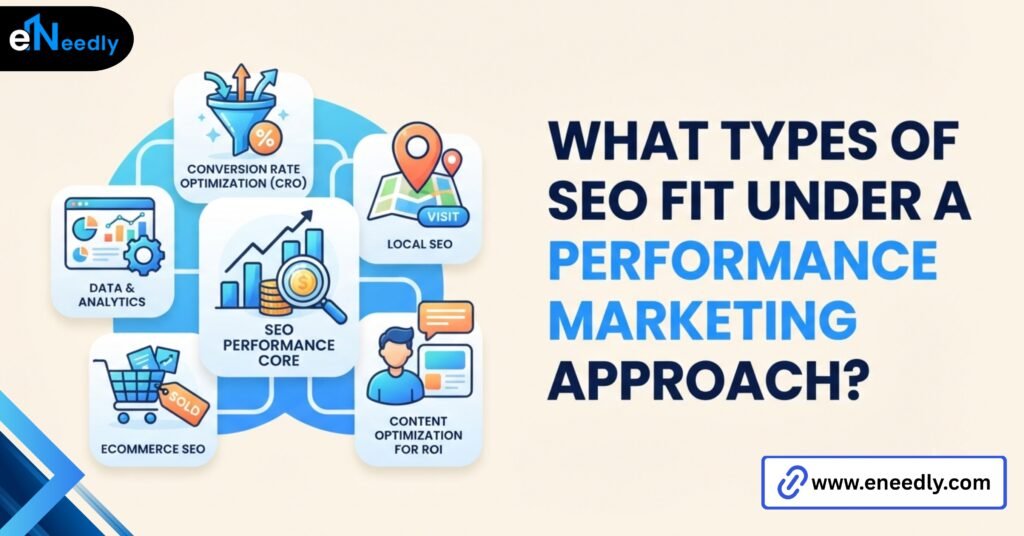
What Types of SEO Fit Under a Performance Marketing Approach?
There are several types of SEO in digital marketing, and a performance mindset doesn’t throw any of them out — it just changes how you sequence and measure them.
Technical SEO
covers site speed, crawlability, indexing, structured data, and mobile usability. This is the foundation. If Google can’t crawl your service pages properly, none of the rest matters. We still start almost every engagement with a technical audit, performance approach or not.
On-page SEO
is your content, title tags, headers, internal linking, and how well a specific page matches search intent. This is where performance thinking shows up most obviously; you’re not writing a page to “cover the topic” you’re writing it to move someone toward a call or a form submission.
Off-page SE
Mainly link building and digital PR still matter for authority. But a performance approach asks which pages need that authority most urgently, rather than spreading links evenly.
Local SEO
Google Business Profile, citations, and local landing pages are often the fastest path to measurable results for small businesses, because local intent tends to convert at a much higher rate than broad informational searches.
Content marketing SEO
Meaning blog posts and resource content built around keywords are valuable for the top of the funnel but are usually the slowest type to show performance results. We tell clients this upfront so nobody’s disappointed three months in.
None of these are separate strategies. They’re levers, and performance marketing is really just a discipline for deciding which lever to pull first based on what will actually move revenue.
How Do You Actually Measure SEO Performance Marketing Results?
This is where a lot of SEO reporting quietly falls apart. Traffic and rankings are easy to report because tools spit them out automatically. Revenue attribution takes real setup work, and a lot of agencies skip it.
Here’s what we actually track for clients, roughly in order of how much it matters:
Goal completions in Google Analytics 4 form fills, phone clicks, chat starts, whatever counts as a lead for that business
Conversion rate by landing page, segmented by organic traffic specifically
Keyword rankings, but only for keywords tied to pages with a conversion goal. We don’t track vanity keywords anymore
Assisted conversions, meaning cases where organic search was part of the path but not the last touch
Cost per lead from organic is calculated by dividing monthly SEO spend by leads generated, so it’s comparable to what the client pays for PPC
That last one is the metric that changes conversations with clients. Once someone can see “SEO cost us $340 per lead this month, compared to $580 for Google Ads,” the entire budget conversation shifts.
SEO stops sounding like a leap of faith and starts sounding like a channel with a number attached to it, the same as any other.
The tools we lean on most are GA4 with properly configured conversion events, Google Search Console for query-level data, and a CRM (HubSpot or similar) that can actually tie a closed sale back to the landing page or keyword that started the relationship.
Search Console alone won’t get you there it tells you what people searched, not what they bought.
What Do SEO Performance Marketing Examples Look Like in Practice?
Talking in the abstract only goes so far, so let’s walk through what this looks like as actual decisions.
Say a home services business has a blog with forty posts and three core service pages. Traditional SEO instinct says keep writing blog posts to build topical authority.
Performance instinct asks, “Which of these forty posts is closest to a keyword that converts, and can we build internal links from those posts to the service pages instead of writing post forty-one?”
Or take a B2B software company ranking on page one for a broad keyword like “project management tips.” Lots of traffic, almost no signups, because that searcher isn’t shopping for software yet.
A performance approach would deprioritize that keyword’s further optimization and shift the budget toward a lower-volume, higher-intent keyword like “project management software for construction teams. ” There are fewer searches, but the people searching it are close to a decision.
A third example, and one of the most common fixes we make: a local business is ranking well for their brand name and generic service terms, but their Google Business Profile has twelve reviews from three years ago and no recent photos.
Traditional SEO would say the website’s ranking is “working.” Performance SEO says the GBP listing is bleeding conversions on every single search because people check reviews before they check the website. Fixing that costs almost nothing and often moves the needle faster than months of content work.
These aren’t hypothetical trends they’re the kind of gap between “ranking” and “results” that shows up in nearly every audit we run.
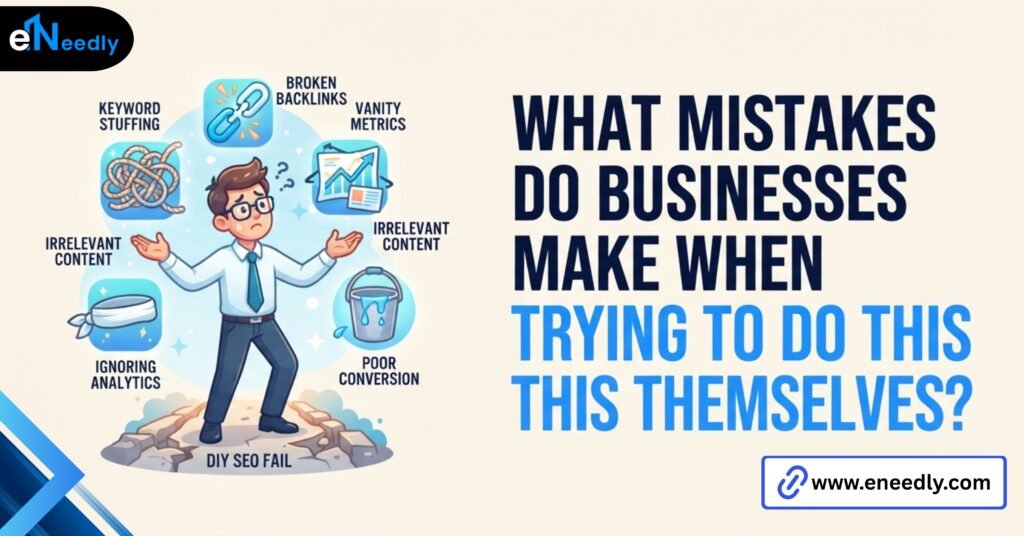
What Mistakes Do Businesses Make When Trying to Do This Themselves?
The most common one: measuring success by ranking position instead of by what that ranking actually produces. A #3 ranking for a low-intent keyword can be worth less than a #7 ranking for a keyword where the searcher has a credit card in hand.
The second mistake, and this one’s almost universal, is treating SEO and paid search as competitors for budget instead of complementary channels.
We’ve seen businesses pull all their PPC budget the moment SEO starts showing traction, only to watch total leads drop because paid was covering search intent that organic hadn’t earned yet. Performance marketing treats channels as a portfolio, not a tournament.
Third: no conversion tracking at all, or tracking set up so loosely that “form submission” and “newsletter signup” get counted as the same goal. If your GA4 setup can’t tell the difference between someone requesting a quote and someone downloading a free checklist, your performance data is telling you a story that isn’t true.
And fourth, a subtler one chasing quick wins on keywords that will never scale. It’s tempting to optimize hard for a keyword that’s already converting well, but if it only gets thirty searches a month, you’ve capped your own upside.
Performance marketing means balancing sure things with growth bets, not just doubling down on what already works.
Is SEO Performance Marketing Right for Every Business?
Mostly yes, but the timeline expectations need to be honest. If a business needs revenue in the next thirty days, SEO performance, framed or not, usually isn’t the fastest lever. Paid search or a promotion will move faster.
SEO performance marketing is what makes sense once you’re thinking six months and beyond, because that’s realistically how long it takes for new content and authority signals to fully mature in search results.
Where it makes the most sense is for businesses that already have some organic presence and want to stop guessing whether it’s paying off. If you’re just starting from zero, there’s value in getting the technical and content foundation right first before you can even measure performance in a meaningful way.
That’s a lot of what we handle on the web design and SEO side of our services — getting the foundation solid enough that performance tracking actually means something once it’s in place.
If you’re not sure which stage you’re at, that’s a reasonable thing to get a second opinion on before committing a budget either way.
FAQs
What does SEO stand for exactly?
SEO stands for Search Engine Optimization, the process of improving a website’s visibility in unpaid search results. It covers technical site health, content relevance, and authority signals like backlinks all aimed at ranking higher for searches relevant to the business.
What are some real SEO performance marketing examples for small businesses?
Common examples include reallocating content effort from blog posts to high-intent service pages, deprioritizing keywords with traffic but low conversion, and fixing an underperforming Google Business Profile before investing further in blog content. Each ties an SEO action directly to a measurable business result.
How long does SEO performance marketing take to show results?
Most businesses see early movement in three to four months, with meaningful, stable results around six to nine months. Local SEO and Google Business Profile fixes tend to move faster than broad content or link-building strategies, which take longer to mature in search rankings.
What types of SEO in digital marketing should I prioritize first?
Technical SEO comes first. Always a site Google can’t crawl properly won’t rank, no matter what else you do. After that, prioritize based on your goals: local SEO for fast, geographically targeted results, or on-page and content SEO if you’re building longer-term authority in a broader market.
Can I combine SEO performance marketing with paid ads?
Yes, and we’d recommend it in most cases. Paid search covers gaps while organic authority builds, and data from paid campaigns like which keywords actually convert can inform your SEO keyword strategy.
Treating them as one coordinated plan, not competing budgets, tends to produce better overall results.
Do I need a big budget to start with SEO performance marketing?
No. The approach is more about measurement discipline and prioritization than spending level. A small budget focused on your highest-intent pages and proper conversion tracking will outperform a larger budget spread thin across vanity metrics and low-intent keywords.