
Quick Answer
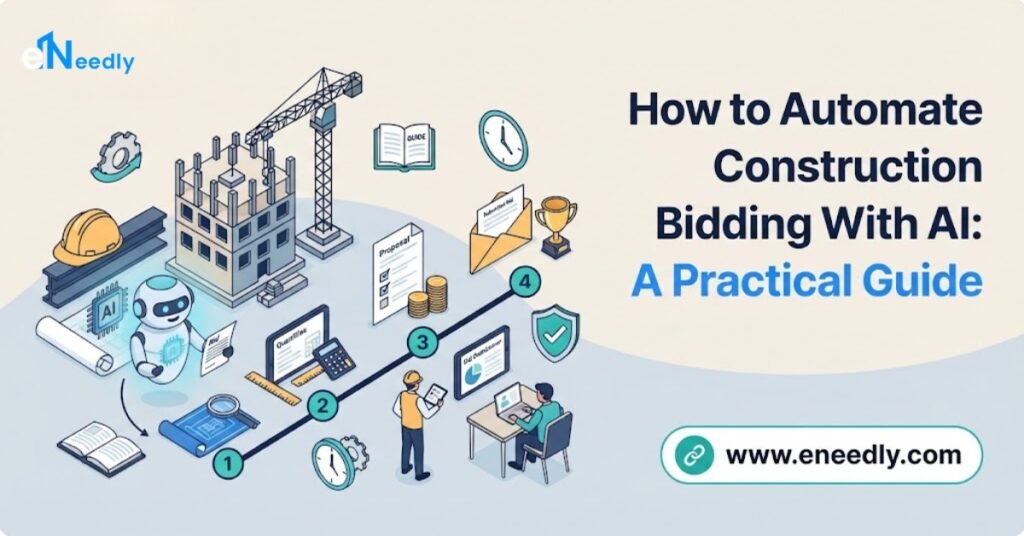
To automate construction bidding with AI, start by mapping your current bid process, then use AI to handle the slow, repeatable parts: finding opportunities, reading plans and documents, preparing estimates, collecting subcontractor quotes, and writing proposals.
People stay in charge of pricing decisions and final approval. eNeedly designs and builds these systems around your way of working, so you bid faster, make fewer mistakes, and have more time to win jobs.
In construction, the company that bids well wins work. But bidding takes a huge amount of time. Your team reads long documents, measures quantities, chases subcontractors, builds spreadsheets, and writes proposals, often under tight deadlines. A missed detail can turn a profitable job into a loss.
That is why many contractors now ask how to automate construction bidding with AI. In this guide, we explain what can be automated, how to do it step by step, what to watch out for, and how eNeedly can help you get started.
What Is Construction Bidding Automation?
Construction bidding automation means using software and AI to handle the repeatable parts of preparing and submitting a bid.
Instead of your estimators doing every task by hand, smart systems do the reading, sorting, calculating, and drafting, and your people review and decide.
This does not mean removing estimators from the process. Pricing a construction job takes experience, judgment, and knowledge of local conditions.
Automation takes care of the busywork around that judgment so your experts can spend their time where it matters most.
A well-built system can support the whole bidding cycle:
- Finding and sorting new opportunities
- Reading and summarizing bid documents
- Measuring quantities and preparing estimates
- Collecting and comparing subcontractor quotes
- Writing proposals and cover letters
- Following up after submission
Why Is Manual Bidding Slow and Risky?
Most contractors still manage bids with a mix of emails, spreadsheets, folders, and memory. This works when the workload is small. As you bid on more projects, it starts to break down.
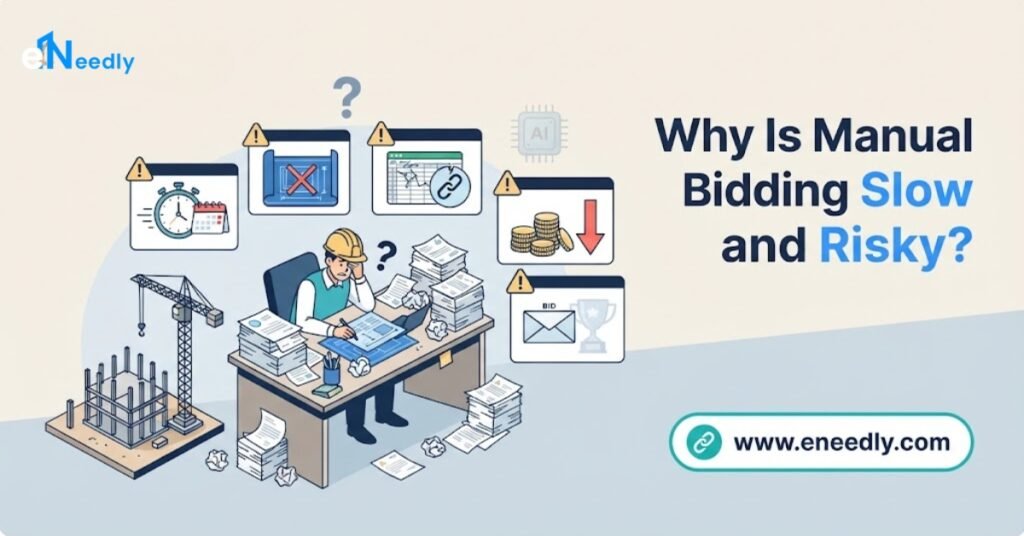
Here are the most common problems:
- Time pressure: Deadlines are tight, and every hour spent on admin is an hour not spent on pricing.
- Missed details: Long specification documents hide important requirements, exclusions, and deadlines.
- Copy and paste errors: Moving numbers between files creates mistakes that are easy to miss.
- Chasing quotes: Waiting on subcontractors and supplier prices slows the whole process.
- Inconsistent proposals: Each bid is written from scratch, so quality varies.
- Lost knowledge: Data from past bids sits in old files and is rarely used to improve future ones.
- Capacity limits: Your team can only prepare so many bids at once, so good opportunities get skipped.
When bidding is slow, you submit fewer bids. When it is error-prone, you risk winning jobs at the wrong price. Automation helps with both.
How to Automate Construction Bidding With AI
You do not have to automate everything at once. The most successful projects start small, prove their value, and grow. Here is a clear path you can follow.
Map your current bid process. Write down every step from finding a project to submitting the bid. Note who does each step, how long it takes, and where delays happen.
Find the biggest time drains. Look for tasks that are repetitive, rule-based, or involve reading and sorting a lot of information. These are the best candidates.
Organize your data. Gather your past bids, price lists, templates, and standard terms in one place. AI works best when it has good information to learn from.
Start with one workflow. Pick a single high-impact task, such as document review or quote collection, and automate it first.
Keep people in the loop. Set clear points where an estimator reviews and approves the AI’s work before anything moves forward.
Test with real bids. Run the new system alongside your current process on a few live projects and compare the results.
Measure and expand. Track time saved and errors avoided, then add the next workflow.
This step-by-step approach keeps risk low and results visible. It is also how eNeedly structures every bidding automation project.
Which Bidding Tasks Can AI Automate?
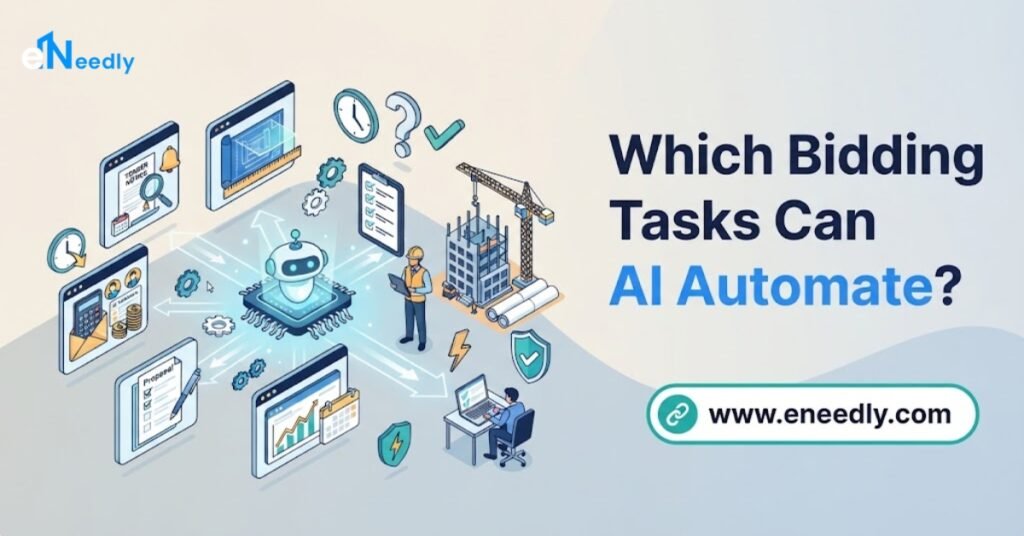
More than most contractors expect. Here are the tasks where AI and automation make the biggest difference.
- Opportunity tracking: Collect new project notices from the sources you follow and sort them by trade, size, and location.
- Document reading: Pull out key dates, scope items, requirements, and special conditions from long bid packages.
- Quantity support: Assist with counting and measuring items from plans so your estimator starts with a solid first draft.
- Estimate preparation: Fill in cost sheets using your own price data and past project history.
- Quote requests: Send requests to subcontractors and suppliers automatically and remind them before the deadline.
- Quote comparison: Gather returned quotes into one clear view so you can compare them side by side.
- Proposal writing: Draft cover letters, scope descriptions, and qualifications using your standard language.
- Submission checklists: Make sure every required form and attachment is included before you submit.
- Follow-up: Remind you to contact clients after submission and record the outcome.
Each of these can be automated on its own, so you can start with the one that hurts the most.
How Does AI Help With Takeoffs and Estimates?
Takeoffs and estimating are the heart of a bid, and also the most time-consuming. AI can speed up both without taking control away from your estimators.
For takeoffs, AI tools can help identify and count items on plans and suggest measurements. Your estimator then checks and corrects them, which is much faster than starting from zero.
For estimates, automation can fill in standard cost items from your own price lists and suggest figures based on similar past projects.
The key word is support. AI gives your estimator a strong starting point. The estimator still applies experience, adjusts for site conditions, and decides the final numbers. This approach saves time while protecting accuracy.
It also creates a useful side benefit: every estimate your team finishes becomes data. Over time, that data makes your future estimates more consistent and better informed.
Can AI Help You Decide Which Bids to Pursue?
Yes. Many contractors waste time on bids they were never likely to win. A bid or no-bid decision is a perfect task for AI-assisted screening.
You can set simple criteria that match your business, such as:
- Project type and size
- Location and travel distance
- Required skills and certifications
- Deadline and current team workload
- Past win rate with similar clients or project types
An automated system can score each new opportunity against these criteria and highlight the ones that fit best. Your team still makes the final choice, but it starts from a ranked list instead of a pile of notices. This protects your time for the bids that matter.
How Does AI Handle Subcontractor Quotes?
Collecting quotes is one of the most frustrating parts of bidding. It means sending many emails, waiting, chasing, and then sorting replies in different formats.
Automation can take over most of this work:
- Send requests: Each subcontractor receives the right scope and documents automatically.
- Send reminders: Gentle follow-ups go out before the deadline without anyone having to remember.
- Read replies: AI can read quotes that arrive as emails or attachments and pull out the key figures and exclusions.
- Organize results: All quotes appear in one clean comparison, with gaps and differences clearly shown.
This saves hours on every bid and reduces the risk of missing an exclusion hidden in a long attachment. Your team can focus on choosing the best partners instead of chasing paperwork.
How Does AI Speed Up Proposal Writing?
A strong proposal builds trust, but writing one from scratch for every bid is slow. AI can create a solid first draft in minutes, using your own approved language, project examples, and company strengths.
A good setup lets you:
- Reuse your best content: Company profile, safety record, qualifications, and standard terms are inserted automatically.
- Adapt to each project: The draft reflects the specific scope, location, and client needs.
- Keep a consistent tone: Every proposal looks professional and matches your brand.
- Check completeness: The system flags missing sections or required documents.
Your team reviews and edits the draft, adds the finishing touches, and sends it. The result is a faster, cleaner proposal, delivered with less stress.
What Should You Watch Out For?
AI is powerful, but it is not magic. A careful approach will protect your business.
- Accuracy: AI can misread a document or miscount an item. Always have an estimator review quantities and prices.
- Data quality: If your past data is messy, results will be weaker. Clean information leads to better output.
- Confidentiality: Bid documents and pricing are sensitive. Make sure your data is handled securely and only used for your own purposes.
- Over-reliance: The system should support your experts, not replace them. Keep human approval on all final prices.
- Change management: Your team needs to understand and trust the new tools. Good training makes a big difference.
A well-designed solution includes review steps, clear limits, and security practices from day one. This is how eNeedly builds every system.
How Do You Know If You Are Ready to Automate?
You do not need a perfect process or a big technical team. You are probably ready if several of these sound familiar:
- Your estimators spend more time on admin than on pricing.
- You turn down bids because you do not have time to prepare them.
- Quotes and documents are scattered across emails and folders.
- Proposals take too long and look different every time.
- You rarely look back at old bids to learn from them.
If you recognize your business in this list, automation can help. A short conversation is usually enough to see where to begin.
Why Choose eNeedly to Automate Your Bidding
eNeedly is a digital solutions agency. We do not offer a one-size-fits-all tool. We study how your business bids today and build a solution that fits your people, your projects, and your goals.
Here is what you can expect when you work with us:
- Plain language: We explain everything clearly, even if you are not technical.
- Business-first thinking: We start with your goals, such as bidding faster or taking on more projects, and work backward.
- Tailored solutions: Your system is built around your process and your data, not a generic template.
- Honest advice: If a task is not worth automating, we will tell you.
- Security and control: Your estimators stay in charge, and your information is handled with care.
- Long-term partnership: We stay with you after launch to improve and expand what we build.
Our aim is simple: help you spend less time on paperwork and more time winning work.
Our Construction Bidding Automation Services
eNeedly offers services that cover the full bidding cycle, so you can start where it makes the most sense.
- Bid opportunity tracking: We collect and rank new projects so you see the best fits first.
- Bid document review: We build systems that read bid packages and pull out key dates, scope, and requirements.
- Estimate and cost sheet automation: We connect your price data and past projects to speed up estimate preparation.
- Subcontractor quote management: We automate requests, reminders, and quote comparison.
- Proposal generation: We create draft proposals that use your approved language and reflect each project.
- Reporting and insights: We turn your bid history into simple reports that show what you win, what you lose, and why.
- Custom solutions: If your process is unique, we design something that fits it exactly.
Each service is built to solve a specific problem, and we only recommend what fits your business.
Our Step-by-Step Process
Our process is simple, transparent, and built to keep you informed.
Discovery call: We learn about your business, your team, and how you bid today.
Opportunity map: We list the tasks that can be automated and rank them by impact and effort.
Plan and quote: You receive a clear plan, timeline, and price before any work begins.
Build: We create your system and connect it to the tools and files you already use.
Testing: We test each workflow on real bid examples and set review points for your estimators.
Launch and training: We go live and show your team how everything works.
Support and improvement: We monitor results, fix issues, and suggest new ways to save time.
You are involved at every stage, and nothing goes live without your approval.
Results You Can Expect From eNeedly
Every business is different, but the goals of bidding automation are consistent. When we work with you, we aim for results like these:
- Time saved: Hours of repetitive work returned to your estimators on every bid.
- Faster turnaround: Quicker responses to new opportunities and tighter deadlines.
- Fewer errors: Consistent processes that reduce missed details and typing mistakes.
- More bids submitted: Capacity to pursue good opportunities you used to skip.
- Better proposals: Clear, consistent documents that reflect your strengths.
- Smarter decisions: Bid history turned into useful insight for future pricing.
We agree on clear goals at the start, so you know exactly how to measure success.
Get Started With eNeedly Today
Starting is easier than most people think. You do not need technical knowledge, a long brief, or a perfect plan. You only need to tell us which part of your bidding takes up too much of your time.
In a free consultation, we will listen to how your team works, point out where automation can help most, and explain what a first project could look like. There is no pressure and no obligation.
Ready to bid faster and win more? Book your free consultation with eNeedly today and see how to automate construction bidding with AI in your business.
Frequently Asked Questions
Can AI really automate construction bidding?
AI can automate many parts of the bidding process, such as finding opportunities, reading documents, preparing estimated drafts, collecting subcontractor quotes, and writing proposals. Final pricing and approval should stay with your experienced estimators. The goal is to remove busywork, not to replace expert judgment.
Will AI replace my estimators?
No. Estimating depends on experience, local knowledge, and judgment that AI cannot replace. Automation gives your estimators more time and a stronger starting point, so they can prepare more bids with greater confidence.
How accurate is AI for construction takeoffs and estimates?
AI is a strong helper, but it can make mistakes, especially with unclear plans or unusual details. That is why a good system always includes a review step where an estimator checks quantities and prices. Accuracy improves further as your own data and corrections are used.
How much does it cost to automate construction bidding?
The cost depends on how many tasks you automate, how complex your process is, and how many tools need to be connected. Starting with one workflow keeps the investment manageable. eNeedly provides a clear plan and quote after your free consultation.
How long does it take to set up bidding automation?
A single, focused workflow can often be ready in a matter of weeks. Larger projects that cover the full bidding cycle are best delivered in phases, so you start seeing benefits early and keep gaining more as each part goes live.
Is my bid and pricing data safe?
It should be, and you should expect a clear explanation of how your data is handled. At eNeedly, we limit access to what is needed for the project, protect your information, and keep your pricing and documents for your own use only.
Do I need technical skills to use AI for bidding?
No. You only need to describe how you bid today and what you want to improve. We handle the technical side, explain everything in plain language, and train your team so they feel confident using the new system.